
Some injuries from war are immediate. Others only begin to reveal themselves after coming home.
Richard Casper knows both.
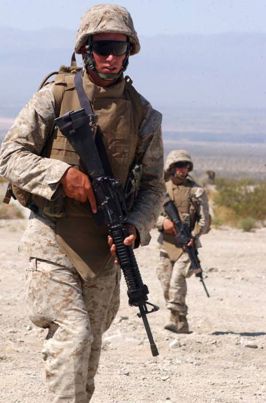
During a 2006-07 deployment to Iraq, the United States Marine survived four separate improvised explosive device blasts.
The explosions left him with a traumatic brain injury.
But surviving Iraq proved to be only the beginning of the battle.
When Casper returned home after serving in the U.S. Marine Corps from 2003-07, he struggled to make sense of what he had experienced and to find a way to express it.
He nearly gave up.
Then he found art.
And eventually, music.
What began as a way for one Marine to work through the unseen wounds of war became something much larger — a mission to make sure other veterans had a place to do the same.
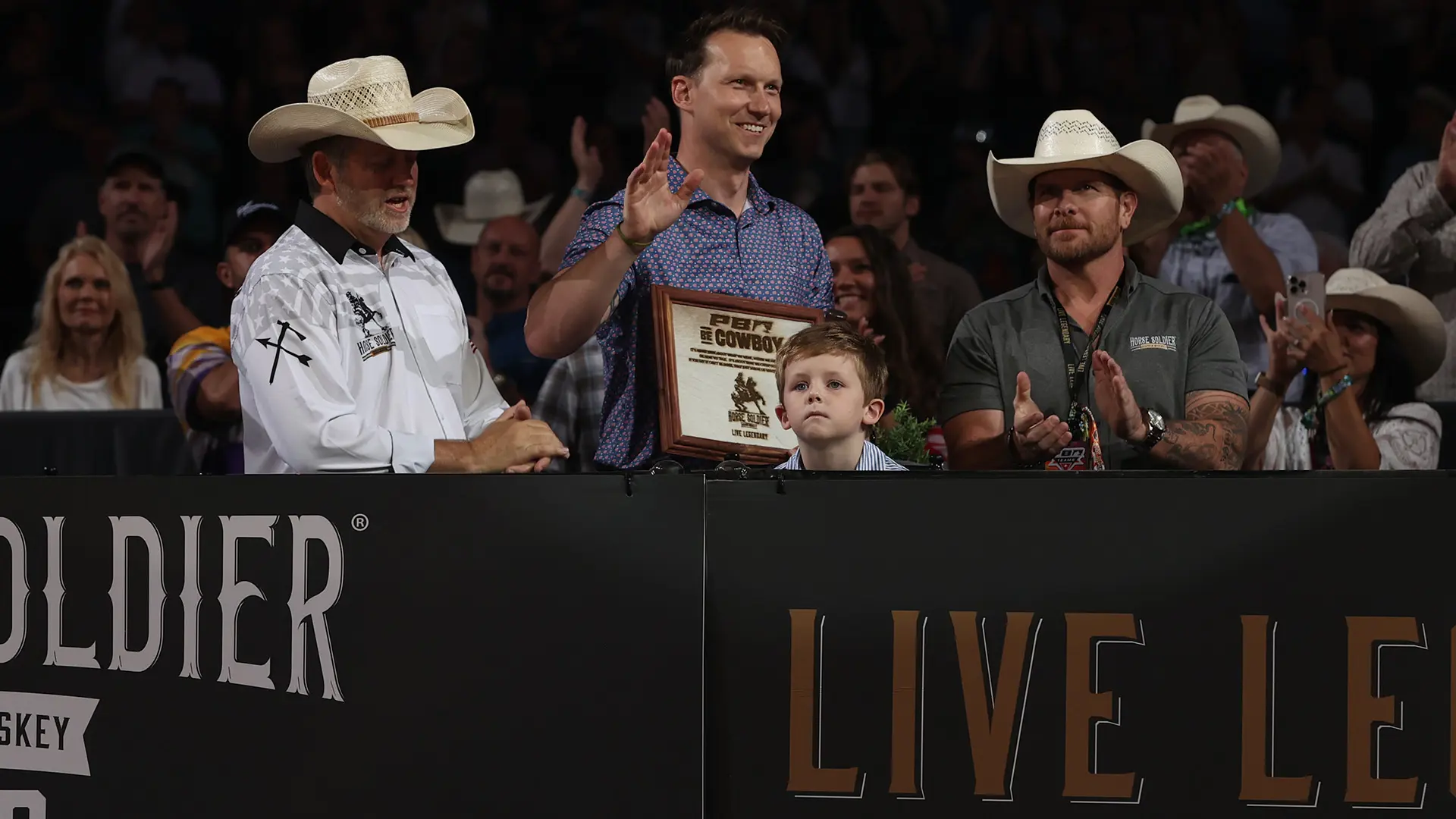
At PBR Teams’ Nashville Stampede Days in the heart of Music City, Casper was recognized with the Horse Soldier Bourbon Be Cowboy Award, honoring a Marine veteran whose service to others did not end when he left the military.
The Be Cowboy Award recognizes everyday heroes who embody the values long associated with the cowboy way of life — courage, integrity, resilience and a willingness to put others before themselves.
Casper has spent nearly two decades living those values.
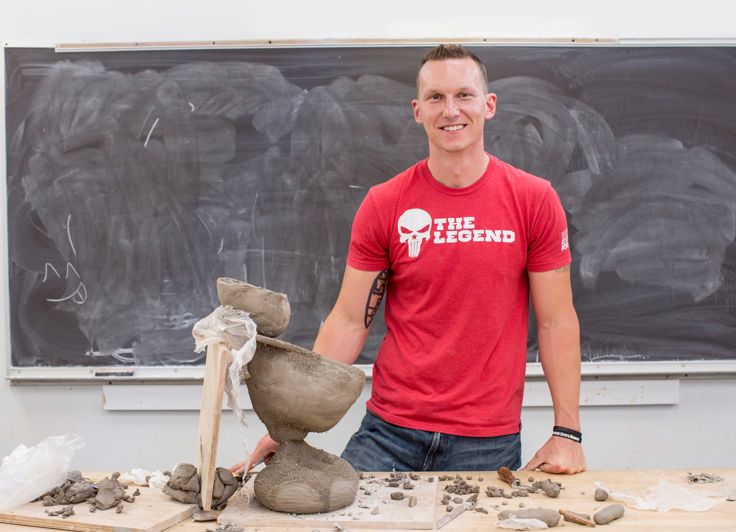
After returning from Iraq, he discovered art and songwriting as therapeutic forms of expression and went on to graduate from the School of the Art Institute of Chicago.
The experience changed the direction of his life.
Instead of keeping what he had learned to himself, Casper carried forward the oath he had taken as a Marine to never leave a fellow Marine behind. Even after returning home, he became a leader and a hand reaching back for others, developing ways for wounded veterans to use creativity to confront experiences for which there are no words.
He co-founded CreatiVets, a nonprofit built around a simple mission: empower wounded veterans to heal through art and music.
Through its songwriting and visual arts programs, CreatiVets works primarily with veterans struggling with post-traumatic stress and traumatic brain injuries, giving them opportunities to transform trauma, struggle and memories of war into something tangible.
Sometimes that means a song.
Sometimes it means a painting, sculpture or piece of creative writing.
But the goal remains the same — giving veterans tools to express what they have carried with them and helping them build a life beyond the battlefield.
Casper knows firsthand why that matters.
“I always tell people we trick veterans into art and music,” Casper said. “They usually walk in reluctant, not wanting to be there. But once we get a pen or a paintbrush in their hands, something shifts. It becomes healing, cathartic, and often lifesaving.”
That trick has now worked for veterans across all 50 states.
CreatiVets has served thousands of veterans, while songs created through its programs have generated millions of streams.
Its signature songwriting program brings wounded veterans to Nashville and the Grand Ole Opry, where they are paired one-on-one with professional songwriters and encouraged to tell stories they may never have shared before.
For some, those few hours can accomplish what years of trying to explain their experiences could not.
One veteran participant described a three-hour songwriting session as doing more for him than the previous six years at the Department of Veterans Affairs.
Another veteran who participated in the visual arts program described leaving the experience feeling as though something deep had finally been released, giving him the courage to live a more meaningful life with his children.
Casper turned his own pain into that possibility for someone else.
And he kept building.
As a songwriter, Casper has earned more than 85 placements in film and television, with songs released by artists including Justin Moore, Craig Morgan, Aaron Lewis, Vince Gill and Granger Smith.
In 2020, he signed a deal with Big Machine Records to begin releasing music created by veterans to audiences around the world.
He has also taught art at the School of the Art Institute of Chicago, Virginia Commonwealth University, Belmont University and the University of Southern California.
His work has earned national recognition.
Casper was named one of TIME Magazine’s Next Generation Leaders in 2017 and became the subject of TIME’s documentary Evidence of Things Unseen.
That same year, President George W. Bush and the Bush Institute recognized his passion and dedication to helping combat veterans, and Casper was later selected as one of 33 scholars from across the country for the Bush Institute’s Stand-To Veteran Leadership Program.
He was named a CNN Hero in 2022, recognized as a Southern Living Southerner of the Year in 2024 and received the Elevate Prize in 2025.
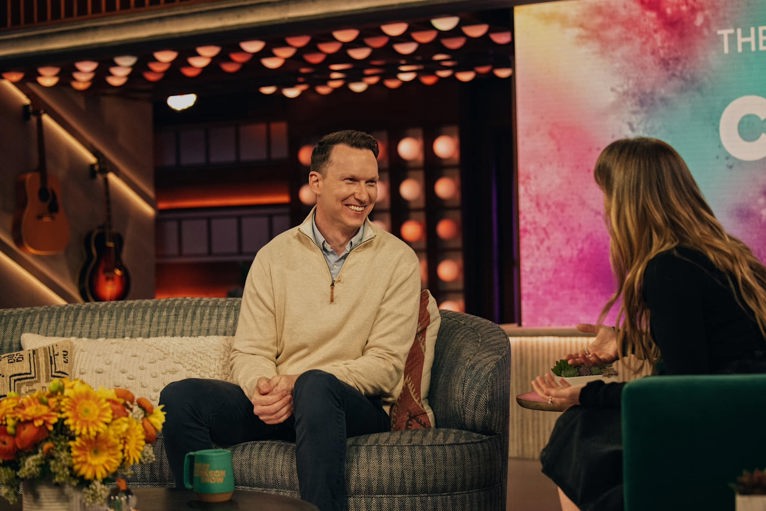
His story and work have also been featured by outlets including The Kelly Clarkson Show, the CMA Awards, Fox & Friends and The Today Show.
But even as the spotlight has found Casper, he has kept turning that light outward, using it as a beacon for fellow veterans still searching for a way forward.
CreatiVets is now transforming a long-abandoned Nashville church into a permanent, 24/7 healing center for veterans.
The organization acquired the property in 2025, only to have the building vandalized shortly afterward, creating another obstacle as renovations were getting underway.
In August 2026, CreatiVets received a $350,000 Lowe’s Community Impact grant to help regain that momentum and continue converting the church into a place where veterans can turn at any hour for community and support.
The planned center will include spaces for music, painting, sculpture, theater, screenwriting and other forms of creative expression while also serving as CreatiVets’ new headquarters.
For Casper, the need for a place that never closes is simple.
“PTS doesn’t come with a schedule,” he said. “It can strike at the most inopportune times, when healthy support isn’t always readily available. We wanted to make sure no veteran has to face those moments alone.”
It is another extension of the mission Casper began after coming home from Iraq.
Take what nearly broke him. Find a way through it. Then turn around and become a light for the next person still trying to find their way.
That commitment to never leave someone behind also made the man standing beside Casper to present the Be Cowboy Award especially fitting.
Mark Nutsch, a retired U.S. Army Special Forces lieutenant colonel, was among the first American soldiers sent into Afghanistan following the Sept. 11, 2001, terrorist attacks.
Then a Special Forces captain, Nutsch commanded Operational Detachment Alpha 595, the 12-man Green Beret team tasked with partnering with Afghan opposition fighters and helping overthrow the Taliban government that had been harboring Al-Qaeda leader Osama bin Laden.
The team entered northern Afghanistan with limited intelligence, unforgiving terrain and no clear blueprint for how its mission would unfold.
Then came the horses.
The rugged terrain made local horses one of the only reliable ways to move around Taliban positions.
For Nutsch, there was an unlikely familiarity to it.
He had grown up on a cattle farm in Kansas, ridden horses and competed in rodeo while attending Kansas State University.
At 32 years old, those skills became part of an extraordinary military mission as Nutsch and the men of ODA 595 carried out their operation on horseback.
Their story became known as that of the “Horse Soldiers.”
More than two decades later, Nutsch continues serving those connected to that mission as a co-founder of Badger Six, helping Afghan allies and their families.
That made the pairing fitting.
One veteran helped spearhead America’s response to Sept. 11 from horseback in Afghanistan.
The other survived four IED blasts in Iraq, came home carrying wounds that could not always be seen and discovered that a paintbrush and a song could become tools for survival.
Both eventually found that leaving the battlefield did not mean their responsibility to others had ended.
That is the cowboy code at its core.
It is not about what someone wears. It is not about where they come from.
And it is not about whether their battles happen inside an arena, on a battlefield or somewhere no one else can see.
It is about courage when the road gets hard.
Resilience when something knocks you down.
Integrity when no one is watching.
And service to others.
Richard Casper came home from war searching for a way to heal himself.
Instead, he built a way for thousands of others to begin healing, too.
He traded one uniform for a paintbrush, a guitar and a mission that continues today.
You do not have to wear the hat, the buckle or the boots to live by the cowboy code.
Make no mistake.
Richard Casper is a cowboy.
From all of us at PBR and Horse Soldier Bourbon, thank you, Richard Casper, for reminding us what it truly means to Be Cowboy.
Stay tuned after each PBR Teams event of the 2026 season as we continue to spotlight the local heroes and changemakers who inspire us.
Photo courtesy of Bull Stock Media