
Some battles are fought on the battlefield.
Others begin long after the uniform comes off.
For Major Heath Patrick, serving his country was never simply a job. It was a commitment to leadership, sacrifice and the people standing beside him.
And after spending more than a decade on active duty in the United States Army, with most of his military career dedicated to Special Forces, Patrick discovered that his mission to serve others was far from over.
It had simply taken a different form.
One that involved less combat gear and more cowboy boots.
One where horses, rather than helicopters, became the tools for building trust, finding purpose and reconnecting with the people who understand the weight of service.
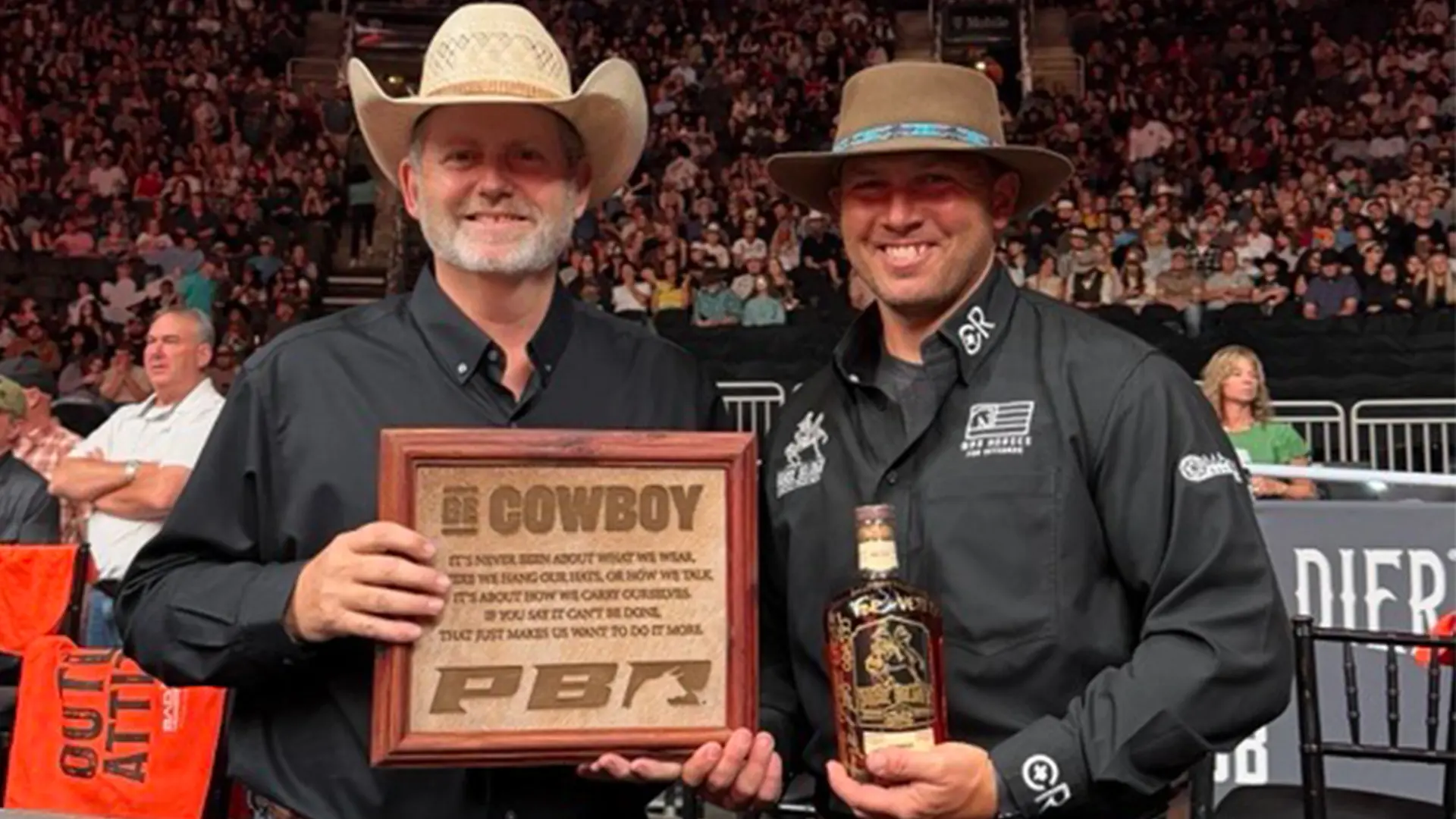
For his military service, leadership and continued commitment to helping fellow veterans, Patrick was recognized during PBR Teams: Outlaw Days presented by Bad Boy Mowers and Tractors at T-Mobile Center in Kansas City, Missouri, with the Horse Soldier Bourbon Be Cowboy Award.
The award recognizes everyday heroes who embody the values long associated with the cowboy way of life — courage, integrity, resilience and a willingness to put others before themselves.
And for Patrick, those values have been guiding principles both in and out of uniform.
A Bronze Star recipient and Army Special Forces veteran, Patrick dedicated more than a decade of his life to serving his country, spending the majority of that time as a Green Beret.
His career was built around the kind of discipline, teamwork and leadership required to operate in some of the world's most demanding environments.
But returning home from military service can bring challenges of its own.
For many veterans, the transition from a life defined by structure, camaraderie and a shared mission into civilian life can mean searching for a new sense of direction.
The uniform may come off, but the experiences, relationships and responsibilities that come with military service don't simply disappear.
And sometimes, finding that next purpose requires getting back in the saddle.
Literally.
After returning to Kansas, Patrick discovered War Horses for Veterans, a nonprofit organization founded in 2014 that uses horsemanship, teamwork and the connection between horses and humans to support combat veterans and first responders.
The organization was built on a powerful idea.
Healing and personal growth can happen in unexpected places.
And for those who have spent years navigating high-pressure situations, the back of a horse might offer a different kind of challenge.
At War Horses for Veterans, participants trade the demands of everyday life for time on the ranch, where they work alongside experienced horsemen and highly trained performance horses to develop communication, confidence and leadership skills.
The organization's flagship five-day program offers veterans and first responders an immersive experience centered around Western performance horsemanship.
Participants begin by learning to communicate with horses from the ground before progressing into the saddle.
As the week continues, they develop skills in riding, roping and working cattle, building toward challenges that require patience, trust and teamwork.
And while those skills may look different from the responsibilities they once carried in uniform, the underlying lessons are surprisingly familiar.
Communication matters.
Trust must be earned.
And when things don't go according to plan, staying calm under pressure can make all the difference.
For veterans accustomed to operating as part of a team, those lessons can help rebuild something that may have been difficult to find since leaving active duty.
A sense of connection.
A shared purpose.
And the confidence to navigate whatever comes next.
For Patrick, the organization offered an opportunity to reconnect with a lifestyle that had been familiar long before his military service.
Raised in a ranching family in Kansas, Patrick already understood the value of hard work and the relationship between horses and the people who care for them.
But his experience with War Horses for Veterans gave that connection a new meaning.
What began as an opportunity to participate in the program eventually grew into something much bigger.
Patrick became part of a community of veterans who understood one another's experiences and shared a commitment to helping the next person through the gate.
And rather than simply completing the program and moving on, Patrick found another way to serve.
He came back. Not just as a participant. But as a mentor.
Today, Patrick serves as a War Horses for Veterans ambassador, helping new and returning participants navigate the same experiences that once helped him.
His role is rooted in the belief that the support veterans receive shouldn't end when they leave the ranch.
Because the lessons learned during five days with horses are only the beginning.
It's what happens afterward that matters just as much.
War Horses for Veterans emphasizes the importance of taking those experiences back into everyday life, where improved communication, greater self-awareness and renewed confidence can strengthen relationships with family, friends and the broader community.
And for someone like Patrick, who understands firsthand the challenges that can accompany military service and the transition home, being able to offer that support carries a special meaning.
He knows what it means to be the person learning.
Now, he has the opportunity to be the person helping someone else find their footing.
Sometimes, that means offering guidance to a participant working with a horse for the first time.
Other times, it means simply being another veteran who understands where someone has been and is willing to help them figure out where they want to go.
But regardless of the situation, the mission remains the same.
Keep serving.
Keep leading.
And make sure no one has to navigate the next chapter alone.
Patrick's involvement with War Horses for Veterans has also taken him beyond the ranch and into the competitive arena.
He has participated in two War Horse Challenges, competing in Las Vegas and Fort Worth alongside fellow veterans in events that showcase the courage, determination and horsemanship developed through the program.
The competition brings together veterans and performance horses, giving participants an opportunity to demonstrate their skills on some of the biggest stages in Western sports.
But the War Horse Challenge represents something much larger than the scores on a leaderboard.
Every ride reflects hours of preparation.
Every maneuver requires communication between horse and rider.
And every participant carries a story of perseverance, service and the willingness to take on something new.
What began in Las Vegas has grown into a tradition that includes the National Reined Cow Horse Association's Snaffle Bit Futurity in Fort Worth.
There, veterans have an opportunity to compete in an environment that requires precision, focus and the ability to trust a partner weighing more than 1,000 pounds.
For participants who once depended on the people beside them in the military, that partnership offers another way to put familiar values into practice.
And Patrick has experienced those challenges from both sides.
First as a competitor.
Now as a mentor helping others prepare for their own opportunities in the arena.
His continued involvement reflects something central to War Horses for Veterans' mission.
The program isn't simply about teaching someone to ride.
It's about helping people rediscover the strength, leadership and sense of purpose they already possess.
The horses just help bring those qualities back to the surface.
And the organization continues finding ways to carry that mission beyond its gates.
Through its one-day and five-day programs, War Horses for Veterans creates opportunities for personal growth, connection and reflection, while its War Horse Resources initiative connects military personnel, veterans and first responders with additional support in areas including mental wellness, peer support, fitness, family services and community resources.
It's a reminder that personal growth doesn't happen on a fixed timeline.
And sometimes, the most meaningful part of an experience begins after someone heads home.
For Patrick, that understanding has helped turn his own experience into a continuing commitment to others.
The same man who spent years leading and serving alongside fellow soldiers now helps veterans reconnect with a community built around shared experiences, mutual respect and a love for horses.
And that made the man presenting Patrick with the Be Cowboy Award especially fitting.
Retired Green Beret Mark Nutsch, co-founder of Horse Soldier Bourbon, knows firsthand what it means to serve his country from the back of a horse.
Following the terrorist attacks of Sept. 11, 2001, Nutsch led a team of U.S. Army Special Forces soldiers into northern Afghanistan as part of one of America's first military responses to the attacks.
The mission became one of the most extraordinary chapters in modern military history.
Tasked with working alongside Afghan forces against Taliban and Al-Qaeda fighters, Nutsch and his fellow Green Berets navigated the rugged mountain terrain on horseback.
Modern American soldiers riding into battle using a mode of transportation more closely associated with cavalrymen of generations past.
The team became known as the Horse Soldiers, and their remarkable mission later inspired the film 12 Strong and other accounts of the operation.
Years later, Nutsch and fellow Special Forces veterans helped establish Horse Soldier Bourbon, building a company rooted in the same values that defined their military careers.
Courage. Commitment. Brotherhood.
And an unwavering belief in the importance of serving something greater than yourself.
At Outlaw Days, Nutsch helped carry that legacy forward by recognizing a fellow Green Beret whose mission has continued long after active-duty service.
Both men know the responsibility that comes with leading others.
Both understand the unique relationship between soldiers and horses.
And both have found ways to carry the values of military service into the next chapters of their lives.
For Nutsch, horses played an extraordinary role in a historic mission overseas.
For Patrick, they've become part of a mission helping fellow veterans rediscover purpose here at home.
And when Patrick was recognized in front of the Kansas City crowd at T-Mobile Center, the moment honored more than his military accomplishments or his work with War Horses for Veterans.
It recognized a commitment to leadership that didn't end when he left active duty.
Because the cowboy way of life has never been defined solely by what someone wears or whether they can stay aboard a bucking bull for eight seconds.
Sometimes, being a cowboy means stepping forward when someone else needs help.
Sometimes, it means confronting challenges that aren't always visible to the people around you.
And sometimes, it means returning to the place that helped you find your own footing so you can extend a hand to the next person.
Patrick embodies those values through his service, his mentorship and his determination to remain connected to the community that has supported him.
His story is a reminder that the mission doesn't always end when the assignment does.
That strength can take many forms.
And that one of the most meaningful things a person can do with the lessons they've learned is share them with someone else.
At War Horses for Veterans, the ranch is just the beginning.
For Heath Patrick, so is his continued commitment to helping others.
And that's what makes him a cowboy.
From all of us at PBR and Horse Soldier Bourbon, thank you, Major Heath Patrick, for reminding us what it truly means to Be Cowboy.
Stay tuned for the final Horse Soldier Bourbon Be Cowboy Award presentation at the 2026 PBR Teams Championship in Las Vegas, where we'll recognize one more local hero who embodies the true cowboy spirit.
To learn more about War Horses for Veterans, its programs and ways to support its mission, visit warhorsesforveterans.org.
Photo courtesy of Bull Stock Media