08.26.26 - News
Cowboy courage on Sixth Street: Austin officers honored at Gambler Days
Senior police officers Keston Campbell and Artur Markov recognized for their courage during the March 1 mass shooting on Austin’s Sixth Street.
By Harper Lawson
At 1:58 a.m. on March 1, downtown Austin was two minutes from closing time.
Thousands of people were preparing to spill out of the bars lining Sixth Street after another Saturday night in the heart of the city’s entertainment district.
Keston Campbell was joking around with his partner, Nicholas LaBarbera, as the two Austin Police officers watched the crowds thicken along the sidewalks.
A few blocks away, Artur Markov had forgotten his watch and asked another officer for the time.
1:58.
“Alright, here we go,” he remembered thinking as he prepared for the chaos that typically followed last call.
None of them knew what was actually about to come.
Moments later, reports of a shooting began crackling across their radios.
At first, LaBarbera wondered whether the call was even real.
Then the radio traffic changed.
Multiple people had been shot.
Campbell and LaBarbera bolted toward their patrol car, weaving around Uber drivers, pedicabs and pedestrians as they raced west.
Markov, working alone nearby, started moving toward the same emergency.
Then came a sound none of them could mistake.
More gunshots.
And while crowds began running away from them, the three officers went the other direction.
Like fish swimming upstream. Toward the gunfire.
On March 1, Campbell, LaBarbera and Markov confronted an active shooter at Buford’s Backyard Beer Garden on West Sixth Street, ending an attack that killed 19-year-old Ryder Harrington, 21-year-old Savitha Shan and 30-year-old Jorge Pederson and wounded 16 others.
Authorities have said the toll could have been far greater without the officers’ rapid response.
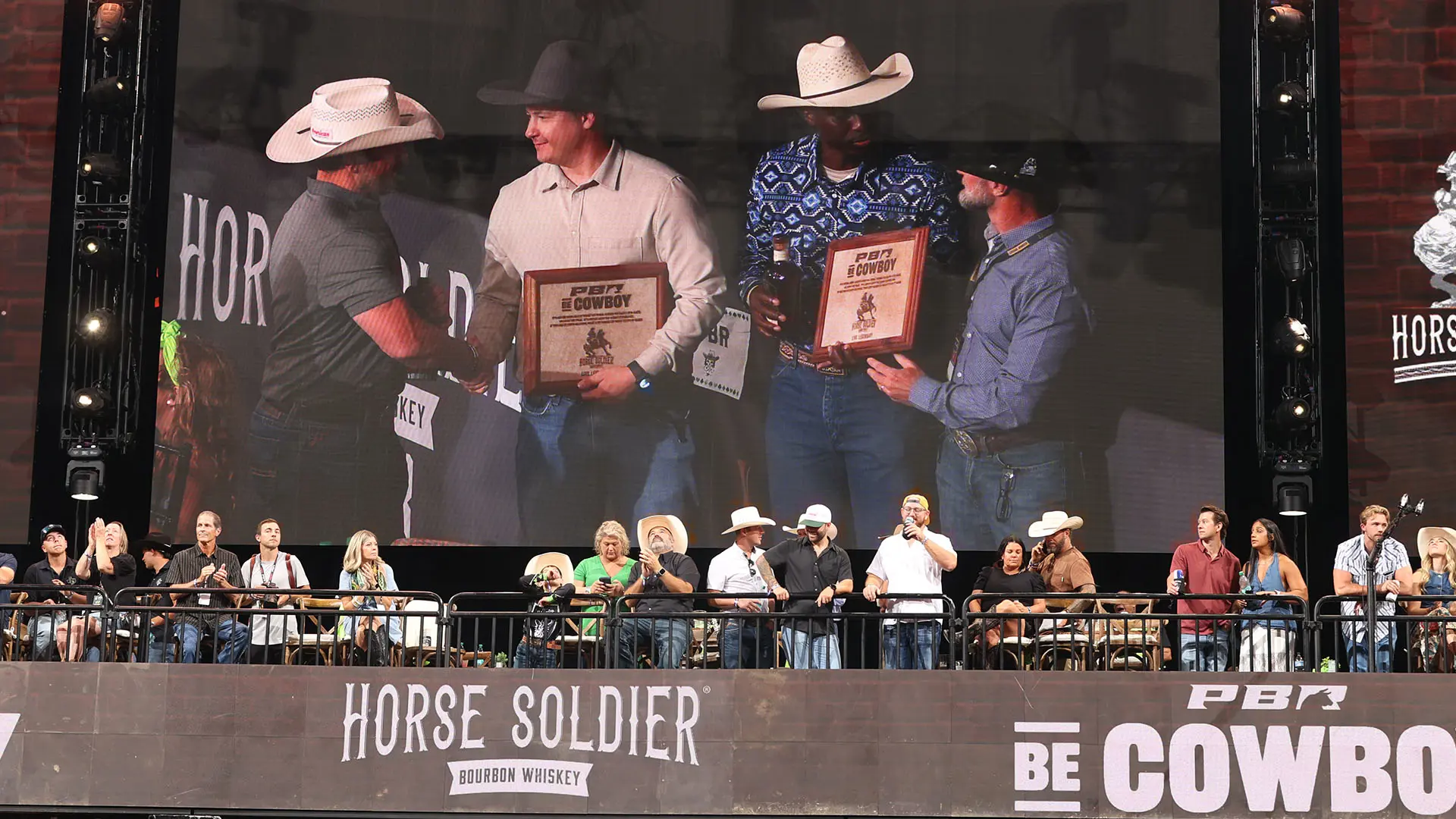
For the courage they displayed that morning, Campbell and Markov were recognized during PBR Teams’ Gambler Days with the Horse Soldier Bourbon Be Cowboy Award.
The Be Cowboy Award recognizes everyday heroes who embody the values long associated with the cowboy way of life — courage, integrity, resilience and a willingness to put others before themselves.
You do not have to wear the hat, buckle or boots to be a cowboy.
Sometimes, you just have to be willing to run the opposite direction of everyone else.
That morning, all three officers had volunteered for an extra downtown shift designed to put more police on the streets during one of the busiest parts of the weekend.
Campbell and LaBarbera regularly worked together patrolling southeast Austin.
Campbell had also played a role in Markov’s path to patrol.
Campbell had helped train him during a stint as an Austin Police Department academy instructor.
Now, teacher and student were converging on the same nightmare from different directions.
Investigators later determined that the gunman had driven past Buford’s, firing a pistol from his vehicle toward the crowded open-air patio before parking, retrieving an AR-15-style rifle and returning.
By the time Campbell, LaBarbera and Markov reached the area, no one knew exactly where the shooter was.
Campbell and LaBarbera began running west on Sixth Street, screaming for people to get down and find cover.
Campbell twice told his partner, “I’m with you,” at one point grabbing LaBarbera by the shoulder as they moved forward.
Around them, people disappeared behind cars, building pillars and anything else that might offer protection.
Then they saw him.
“We kept asking, ‘Where is he? Where is he?’ Nobody really knew and it just felt like he materialized out of nowhere,” LaBarbera later told the Austin American-Statesman.
Bullets began flying toward the officers.
Campbell and LaBarbera returned fire.
Markov was approaching through an alley, running, as he described it, “toward where the people were running from.”
Bystanders pointed him toward the gunman.
At first, the crowd between Markov and the shooter made it impossible for him to safely fire.
Then an opening appeared.
Markov fired at nearly the same moment as Campbell and LaBarbera.
The gunman went down.
“The suspect is down!” Markov shouted into his radio.
From the first reports of gunfire to the officers confronting the shooter, the response unfolded in a matter of moments.
Law enforcement experts later pointed to their actions as an example of precisely how officers are trained to respond to an active shooter — quickly identify the source of the threat, move toward it and stop the killing.
But those few moments were the culmination of three very different roads into law enforcement.
Campbell, the most experienced of the three, never originally planned to become a police officer.
Born in Chicago and raised partly in Trinidad, he attended college in Indiana expecting to become an English teacher.
After moving to Austin and volunteering with AmeriCorps, a friend invited him to a police recruiting event.
Campbell went along despite having little interest in the profession.
Then he heard what the job actually entailed.
“I didn’t even want to be an officer, but I went with him and fell in love with the description of the job,” Campbell said.
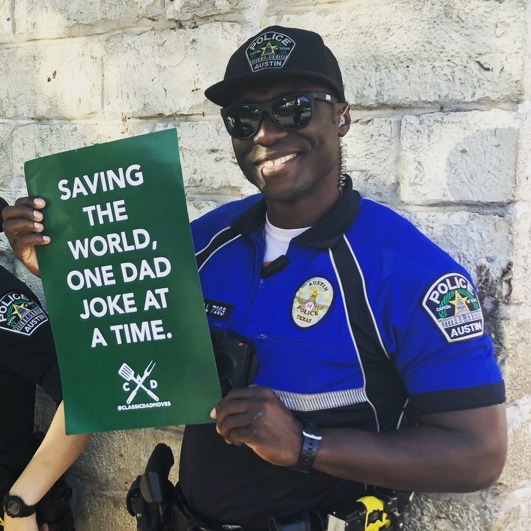
He joined the police academy in 2011 and has spent most of his career on patrol, along with time as an academy instructor and in a street narcotics unit.
Markov took an entirely different path to the same department.
He grew up near the Russia-Ukraine border and studied music in college.
A classically trained violinist, Markov eventually moved to the United States with one goal in mind: becoming a police officer.
He initially worked as a handyman in San Francisco before following clients to Austin, falling in love with the city and deciding to stay.
After becoming a U.S. citizen, he joined the Austin Police Department in 2023.
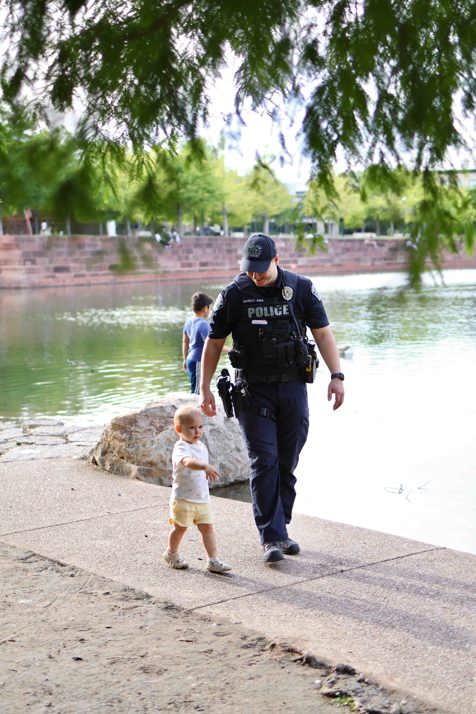
He has developed a particular interest in helping children who are victims of crime.
“No one calls you when something good happens,” Markov said. “So my purpose is not to make it worse and try to help as much as I can.”
On March 1, that purpose was tested in a way few officers ever experience.
And stopping the shooter did not mean the effects of that morning ended.
In the months afterward, Campbell leaned on his parents and family in Trinidad as he processed what had happened.
“I’ll say not only is it not normal to take someone else’s life, it is also not normal to realize that someone is indeed trying to take yours,” he said.
Markov spent about a month at home following the shooting.
He has a 2-year-old daughter.
Eventually, though, he wanted to return to patrol.
“I also wanted to get back to patrol to normalize my life,” he said.
All three officers have described themselves less as heroes than as people who happened to be in the right place at the right time, carrying out the responsibility they accepted when they put on the uniform.
That made the man presenting the Be Cowboy Award to Campbell and Markov especially fitting.
Will Summers, a retired Green Beret, was one of the original Horse Soldiers who participated in the historic Special Forces mission in northern Afghanistan as part of America’s response to the Sept. 11, 2001, terrorist attacks.
Summers and his fellow soldiers entered a country defined by rugged mountains, limited infrastructure and an enemy operating across unforgiving terrain.
To accomplish their mission, they did something few modern American soldiers expected to do in combat.
They climbed onto horses.
Their story became synonymous with courage, adaptability and the willingness to move directly into danger when others needed them.
More than two decades later, one of those Horse Soldiers stood inside a PBR arena honoring two Austin police officers for doing much the same thing.
Different uniform. Different mission. Same instinct.
Go where you are needed.
For Campbell and Markov, that meant West Sixth Street before dawn on March 1.
There was no time for a speech about courage.
There was gunfire ahead of them and people who needed help.
That is the cowboy code at its core.
It is not about what someone wears.
It is not about where they come from.
And it is not about whether the danger waiting ahead is inside an arena, on a battlefield or on a crowded city street.
It is courage when hesitation would be easier.
Integrity when no one has time to tell you what to do.
Service when someone else’s life matters more than your own safety.
And the willingness to look at the person beside you and say, “I’m with you.”
LaBarbera later described their responsibility in much simpler terms.
“Ultimately our job is to preserve life,” he said. “To stop bad people and save innocent people. That is why we signed up for this job.”
On March 1, Campbell, Markov and LaBarbera fulfilled that promise under circumstances no officer ever hopes to face.
They could not save everyone.
But by running toward the gunfire, they helped ensure more families did not receive the phone call no family ever wants.
You do not have to wear the hat, the buckle or the boots to live by the cowboy code.
Sometimes being a cowboy means being the person running toward danger while everyone else is running away.
From all of us at PBR and Horse Soldier Bourbon, thank you, Keston Campbell and Artur Markov for reminding us what it truly means to Be Cowboy.
Stay tuned after each PBR Teams event of the 2026 season as we continue to spotlight the local heroes and changemakers who inspire us.
Photo courtesy of Bull Stock Media